
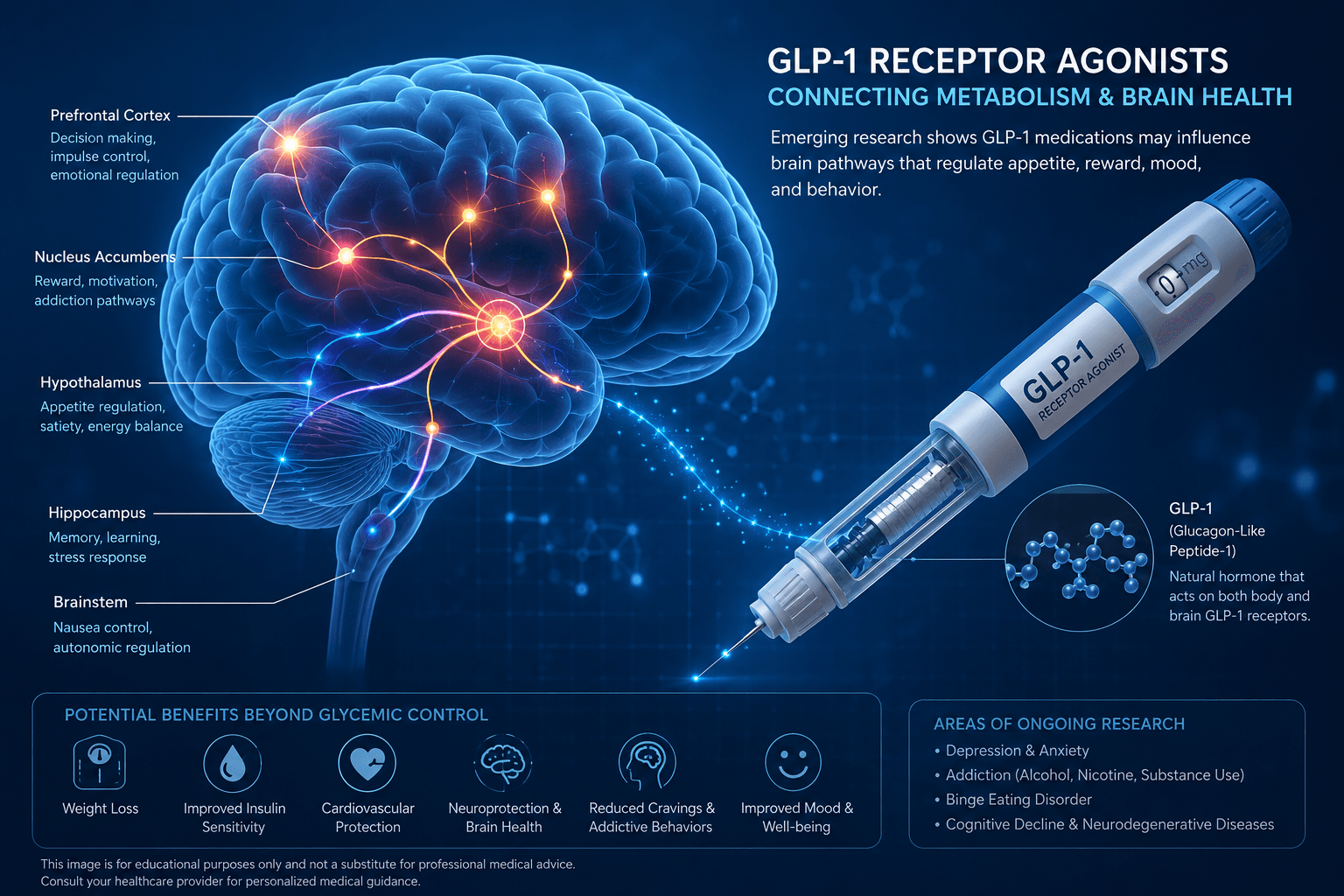
For years, GLP-1 receptor agonists such as Ozempic (semaglutide) and Wegovy have dominated headlines for their remarkable ability to help patients with type 2 diabetes and obesity achieve better blood sugar control and significant weight loss. However, an exciting new chapter is unfolding in medical research. Scientists are now exploring whether these medications may also have profound benefits for the brain—potentially improving mental health, reducing addictive behaviors, and even lowering the risk of psychiatric emergencies.
While these discoveries are still in the early stages, they represent one of the most intriguing developments in modern medicine.
What Are GLP-1 Receptor Agonists?
GLP-1 (Glucagon-Like Peptide-1) receptor agonists are medications originally developed to treat Type 2 Diabetes Mellitus. They mimic a naturally occurring hormone that:
1)Stimulates insulin release
2)Reduces glucagon secretion
3)Slows gastric emptying
4)Promotes satiety and reduces appetite
Today, these medications are widely prescribed for obesity management and have also demonstrated significant cardiovascular and kidney health benefits. Popular GLP-1 medications include:
Ozempic (Semaglutide)
Wegovy (Semaglutide)
Rybelsus (Oral Semaglutide)
Mounjaro (Tirzepatide*)
Zepbound (Tirzepatide*) (*Tirzepatide also acts on GIP receptors.)
A Surprising Discovery: Effects Beyond Metabolism
Researchers initially focused on the metabolic benefits of GLP-1 drugs. However, large observational studies soon revealed unexpected trends.
Patients taking GLP-1 medications appeared to experience:
Fewer psychiatric emergency department visits
Lower rates of impulsive and violent behaviors in some analyses
Reduced binge eating episodes
Decreased alcohol cravings
Lower nicotine dependence
Improved emotional regulation
Better overall quality of life
Although these findings are observational and do not prove cause and effect, they have sparked worldwide interest in the potential psychiatric applications of GLP-1 therapies.
How Could These Medications Affect the Brain?
Scientists now know that GLP-1 receptors are not limited to the pancreas. They are widely distributed throughout several regions of the brain involved in:
Reward processing
Motivation
Memory
Mood regulation
Impulse control
Appetite regulation
This discovery suggests that GLP-1 medications may influence neurological pathways in addition to metabolic health.
1. Dopamine Regulation
One of the leading theories involves dopamine—the brain's "reward" neurotransmitter.
Excessive dopamine signaling has been associated with:
Addiction
Compulsive eating
Substance abuse
Impulsive behavior
GLP-1 receptor activation appears to modulate dopamine release within the brain's reward circuitry, potentially reducing cravings and improving behavioral control. Researchers are investigating whether this mechanism could benefit conditions such as binge eating disorder, alcohol use disorder, and nicotine dependence.
2. Reducing Brain Inflammation
Chronic inflammation is increasingly recognized as an important contributor to depression, cognitive decline, and several neuropsychiatric disorders.
Experimental studies suggest GLP-1 receptor agonists may:
Reduce neuroinflammation
Decrease activation of inflammatory brain cells (microglia)
Protect neurons from oxidative stress
Improve communication between brain cells
These anti-inflammatory effects may partly explain improvements in mood and cognitive function observed in some studies.
3. Improving Brain Plasticity
Emerging evidence indicates that GLP-1 medications may promote:
Hippocampal neurogenesis
Improved learning
Better memory
Enhanced stress resilience
This has led researchers to explore whether these drugs could eventually play a role in treating neurodegenerative diseases such as Alzheimer's disease and Parkinson's disease, in addition to certain psychiatric disorders.
Potential Mental Health Applications
Although none of these uses are currently approved for routine clinical practice, ongoing research is exploring GLP-1 receptor agonists in:
Depression
Anxiety disorders
Binge eating disorder
Alcohol use disorder
Nicotine addiction
Substance use disorders
Obsessive eating behaviors
Cognitive decline
Some early studies even suggest patients report a reduction in "food noise"—the persistent intrusive thoughts about food that many people with obesity experience. Researchers are now examining whether similar effects could extend to other compulsive behaviors.
A Balanced View: Benefits and Risks
Despite the encouraging findings, experts emphasize that GLP-1 medications are not currently approved as psychiatric treatments. Research has also identified reports of psychiatric adverse events—including anxiety, insomnia, stress, and eating-related symptoms—in some individuals. Regulatory agencies continue to monitor these medications, and current evidence has not established a definitive causal link between GLP-1 drugs and serious psychiatric outcomes such as suicidal thoughts. Patients with existing mental health conditions should always discuss treatment decisions with their healthcare providers and should not start or stop GLP-1 therapy without medical advice.
The Future of GLP-1 Medicine
The story of GLP-1 receptor agonists is evolving rapidly. What began as a breakthrough in diabetes care has expanded into obesity treatment, cardiovascular protection, kidney disease management, and potentially neurological and psychiatric medicine. Large randomized clinical trials are now underway to determine whether these promising early observations translate into safe and effective treatments for mental health disorders. If future studies confirm these findings, GLP-1 receptor agonists could redefine how clinicians approach conditions involving addiction, compulsive behaviors, mood disorders, and cognitive decline.
Final Thoughts
GLP-1 receptor agonists have already transformed the management of diabetes and obesity. Their potential influence on brain health opens an exciting frontier in medicine. While more evidence is needed before these medications can be recommended for psychiatric conditions, ongoing research continues to reveal just how interconnected metabolism and brain function truly are.For now, patients should view these findings with cautious optimism. The future of GLP-1 therapy may extend far beyond weight loss—potentially offering new hope for millions living with mental health and neurobehavioral disorders.
Disclaimer: This article is intended for educational purposes only and should not be considered medical advice. Patients should consult a qualified healthcare professional before starting, stopping, or changing any medication.